Vihaan Kumar v. State of Haryana: Supreme Court Reinforces Arrest Rights Under Article 22
The Supreme Court declared an arrest illegal due to non-communication of grounds, emphasizing that constitutional violations at arrest stage cannot be cured by subsequent procedures.
Adv. Anita Singh
Partner, Criminal Law
Introduction
In Vihaan Kumar v. The State of Haryana (2025 INSC 162), the Supreme Court delivered a landmark judgment reinforcing the constitutional safeguards surrounding arrest, particularly the mandatory communication of grounds of arrest.
Facts
The appellant was arrested for offences under Sections 409, 420, 467, 468, and 471 read with Section 120-B IPC. He alleged that grounds of arrest were not communicated and was later found handcuffed and chained to a hospital bed.
Key Holdings
Justice Abhay S. Oka held that:
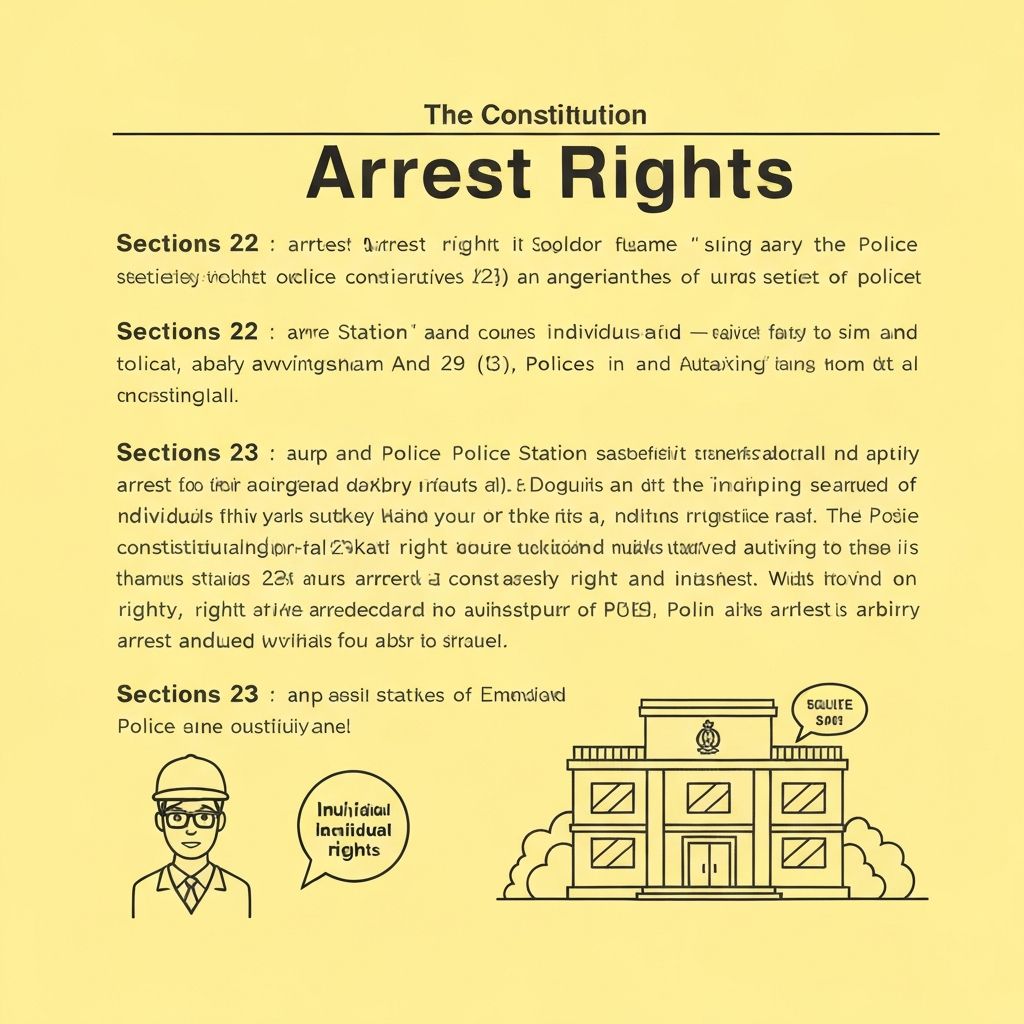
- Article 22(1) Mandate: Communication must be meaningful and effective, preferably in writing
- Burden of Proof: The State must prove compliance; mere diary entries without actual grounds are inadequate
- No Validation: Constitutional violations at arrest cannot be cured by subsequent chargesheet filing or remand orders
On Dignity and Handcuffing
The Court condemned the handcuffing and chaining to hospital bed as a gross violation of dignity under Article 21, directing the State to issue guidelines preventing such practices.
Practical Implications
This judgment mandates police to document grounds of arrest contemporaneously and communicate them effectively to the arrested person, strengthening individual liberty protections.
Legal Disclaimer
This article is for informational purposes only and does not constitute legal advice. The information contained herein may not be applicable to all situations and may not reflect the most current legal developments. Please consult with a qualified attorney for specific legal advice regarding your situation.