L
    LawUpConsulting
    Home
    About
    Practice Areas
    Team
    Insights
    Clients
    Contact
    Get Consultation
    Home
    About
    Practice Areas
    LitigationCorporate LawComplianceBanking & FinanceLabour LawCyber Law
    Team
    Insights
    Clients
    Contact
    Get Consultation
    Back to Insights
    Constitutional Law
    April 20, 2025
    7 min read

    Varshatai v. State of Maharashtra: Supreme Court Upholds Use of Urdu as Additional Language

    The Supreme Court affirmed that using Urdu as an additional language on government signboards in Maharashtra does not violate the state's official language laws, celebrating India's linguistic diversity.

    Adv. Priya Sharma

    Partner, Constitutional Law
    Varshatai v. State of Maharashtra: Supreme Court Upholds Use of Urdu as Additional Language

    Introduction

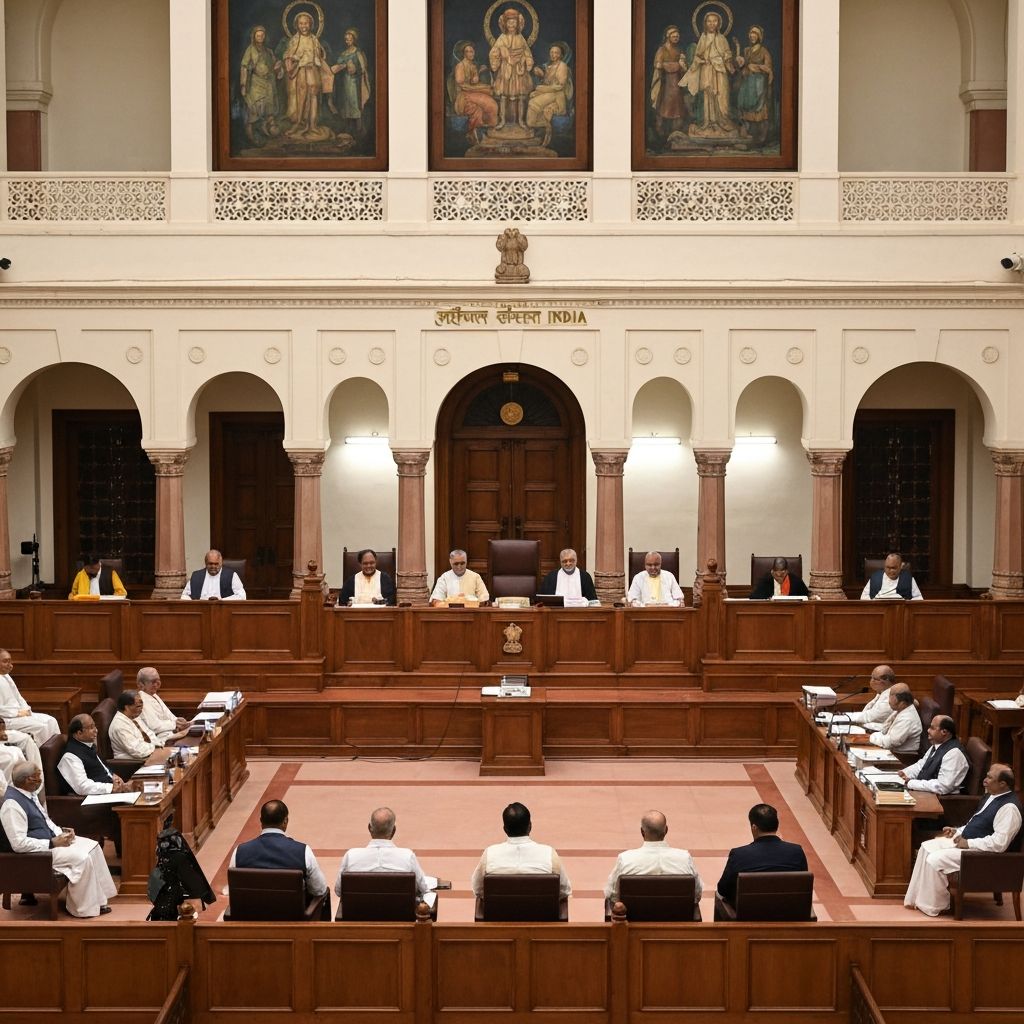
    In Varshatai v. The State of Maharashtra (2025 INSC 486), the Supreme Court delivered a significant judgment upholding India's linguistic diversity by ruling that the use of Urdu as an additional language on municipal signboards does not violate Maharashtra's official language laws.

    Facts of the Case

    The appellant objected to a signboard of the Municipal Council, Patur in Akola district displaying text in both Marathi and Urdu. She contended that since Marathi was the official language of Maharashtra, the use of Urdu was impermissible under the Maharashtra Local Authorities (Official Languages) Act, 2022.

    The Court's Analysis

    Justice Sudhanshu Dhulia, writing for the bench, emphasized several key points:

    • Language as Communication Tool: The Act recognizes that language is essentially a tool for effective communication
    • Cultural Representation: Urdu represents the composite cultural ethos or 'ganga-jamuni tehzeeb' of India
    • Constitutional Tolerance: Article 351 emphasizes spreading Hindi by assimilating expressions from various languages

    Historical Context

    The Court noted that Urdu is an Indo-Aryan language that developed in India due to the need for different cultures to communicate. Indian courts themselves use numerous Urdu terms like 'adalat', 'halafnama', 'vakalatnama', 'peshi', and 'dasti'.

    Significance

    This judgment reinforces constitutional values of tolerance and celebrates India's position as the world's most multilingual country with over 122 major languages.

    Legal Disclaimer

    This article is for informational purposes only and does not constitute legal advice. The information contained herein may not be applicable to all situations and may not reflect the most current legal developments. Please consult with a qualified attorney for specific legal advice regarding your situation.
    Related Articles

    Sunil Kumar Singh v. Bihar Legislative Council: Supreme Court on Proportionality of Legislative Punishment
    Constitutional Law

    Sunil Kumar Singh v. Bihar Legislative Council: Supreme Court on Proportionality of Legislative Punishment

    The Supreme Court quashed the expulsion of a Bihar MLC as disproportionate, holding that while legis...

    Adv. Suresh Gupta9 min read
    All India Judges Association v. Union of India: Three Years Bar Practice Now Mandatory for Civil Judge Exam
    Constitutional Law

    All India Judges Association v. Union of India: Three Years Bar Practice Now Mandatory for Civil Judge Exam

    The Supreme Court mandated that candidates for Civil Judge (Junior Division) examination must have p...

    Adv. Rajesh Kumar6 min read
    Pinky Meena v. High Court of Rajasthan: Supreme Court's Call for Greater Gender Representation in Judiciary
    Constitutional Law

    Pinky Meena v. High Court of Rajasthan: Supreme Court's Call for Greater Gender Representation in Judiciary

    The Supreme Court reinstated a tribal woman judge discharged during probation and made a powerful ca...

    Adv. Priya Sharma7 min read
    L
    LawUp
    Consulting

    Premier legal services delivering strategic counsel with unwavering commitment to integrity and client success across India.

    +91-9057777099support@lawup.in
    C/o Ravi Kumar Sharma, Rajasthan High Court Jaipur, Rajasthan - 302005

    Practice Areas

    • Litigation
    • Corporate Law
    • Banking & Finance
    • Cyber Law
    • Labour Law

    Company

    • About Us
    • Our Team
    • Insights
    • Careers
    • Contact

    Legal

    • Privacy Policy
    • Terms of Service
    • Disclaimer

    Connect

    Bar Council of India Disclaimer: This website is for informational purposes only and does not solicit or advertise work. The contents do not constitute legal advice.

    Powered by RKS

    © 2025 LawUp. All rights reserved.